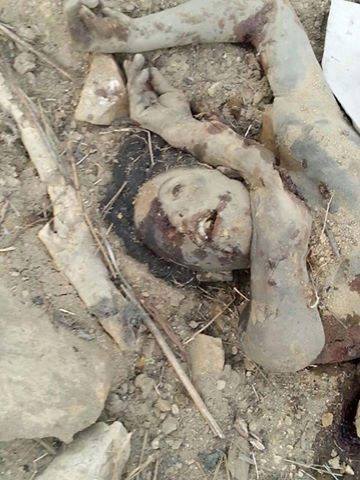
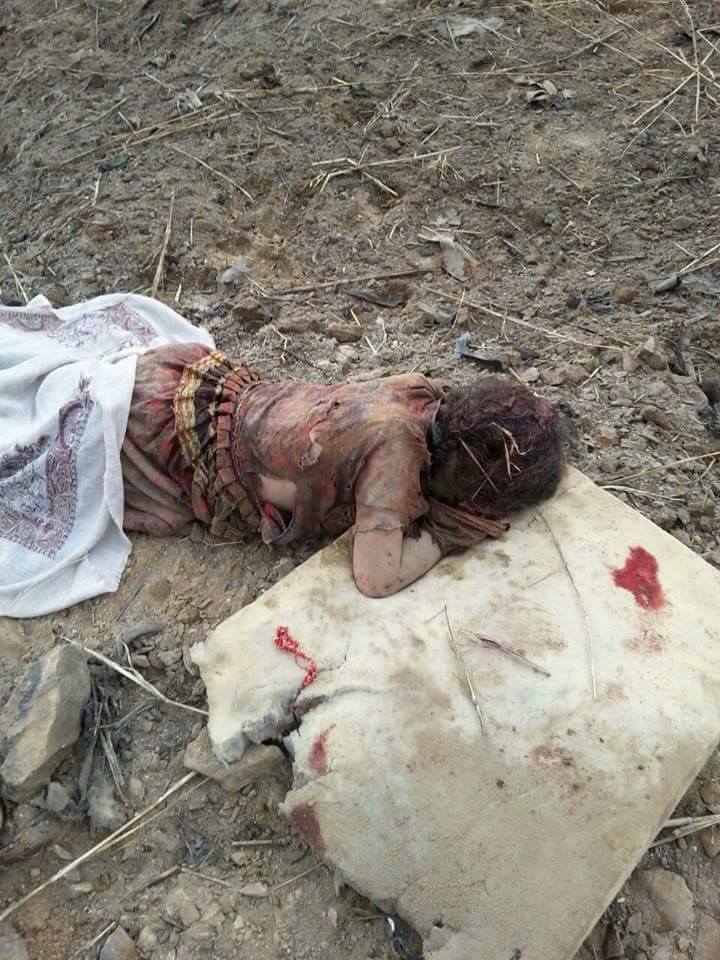
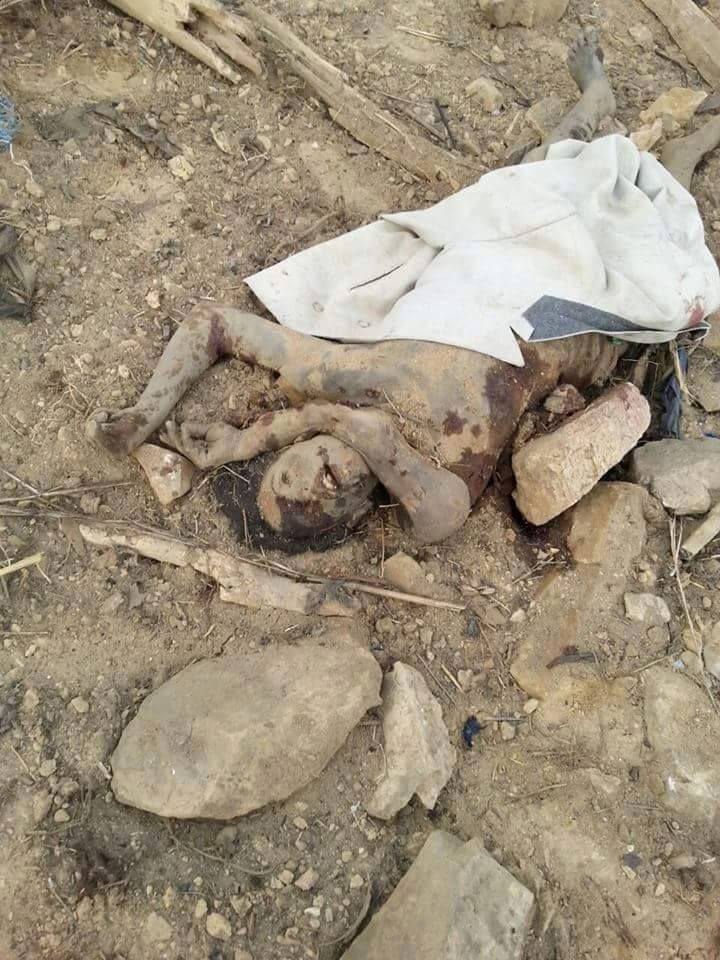
On the 6th July 2015, the Saudi led coalition airstrikes hit a livestock market in Lahj governate, killing approximately 40 people and injuring many more.
This is Amnesty International's report of the incident:
FAYUSH, LAHJ, 6 JULY
On 6 July, a day prior to the airstrikes on the mosque in Waht, coalition forces bombed the livestock market in Fayush, north of Aden in Lahj governorate. The strike, the deadliest hitherto reported, killed some 40 people and injured scores. Adam Hassan Omar, a 52-year-old father of 11 who was injured in the strike told Amnesty International:
“I went to the market to see if I could sell three goats for a better price than I bought them. I used to work as a daily labourer mostly in construction in Crater (Aden), but since the war I have not gone there. It’s difficult to get there now and there is no work there anyway. I try to earn a little money buying and selling goats and sheep. I heard a plane above but did not worry; I did not think they would bomb a market. The plane was going around above for quite a while. Then the explosion happened. I remember feeling as if a strong wind pushed me, transported me and a strong pain as if I had been cut in half. Then I fainted and woke up here [in the hospital]. I don’t know who brought me here”.
Shrapnel slashed through Adam’s abdomen, causing damage to his internal organs. Doctors who treated him said they had to remove some 15cm of intestine and his spleen.
Local residents and sellers in the adjacent food market told Amnesty International that at the time of the airstrike there were no unusual gatherings or activities in the market.
“People were buying and selling goats and sheep and a few cows. They were normal people, some desperate people who had reluctantly come to sell their animals because they have no other income to feed their children,” a market seller said. “There was no fighting around here and there were no Huthis, just some unlucky people. If the bomb had fallen few meters away I could have been killed, just like they were killed. This is what God decided,” a local resident said. Another resident described the bloodshed after the explosion:
“It was a massacre, body parts and blood of humans and animals were mixed together. It was a very painful sight and it was difficult to make sense of what was happening and to deal with it”.
Yet another resident said that his cousin was missing since the market bombing and he feared that he had been killed there.
“After suhur21 he stayed up for an hour or so and then went to the market and never came back. Maybe he was injured and is in a hospital somewhere and cannot contact us [his family] or maybe he was killed and buried with the unidentified bodies.” Relatives and witnesses told Amnesty International some of the victims had been blown apart in the blast but there were no adequate systems available to allow for post-burial ID of unclaimed bodies or remains. Hospital workers told Amnesty International that they had received a large number of civilian injured from the strike.
The sandy soil at the site of the strike absorbed the impact and likely lessened the spread of shrapnel in the area. No remains were found from the bomb dropped by the coalition plane, but the crater – some three meters deep and four meters in diameter – indicates a likely 500-1,000 lbs (200 – 450 +Kg) bomb (similar to the ones used in many other attacks). Remains of animal carcasses were still strewn around when Amnesty International visited the site several days later.
Amnesty International could not trace most of the victims and families of victims of the attack, as most were not local residents but people who were visiting the market from surrounding areas. Amnesty International could not establish with certainty whether any members of the Huthi armed group were present at the livestock market at the time of the airstrike. However, information obtained from multiple sources, including witnesses and residents, indicate there was no combat or other military activity at the time of the attack and that most if not all the victims were civilian bystanders not involved in the conflict.
The attack violated the principle of distinction, a cornerstone of international humanitarian law, which requires all parties to a conflict to: “…at all times distinguish between the civilian population and combatants and between civilian objects and military objectives…”, and which defines military objective as “those objects which by their nature, location, purpose or use make an effective contribution to military action and whose total or partial destruction, capture or neutralization, in the circumstances ruling at the time, offers a definite military advantage.” Military advantage may not be interpreted so broadly as to render the rule ineffective.
Even if some combatants had been present at the site this would not have justified launching an attack on a market, which was sure to cause large scale civilian casualties and fatalities and which was not only disproportionate but also indiscriminate.
‘NOWHERE SAFE FOR CIVILIANS’AIRSTRIKES AND GROUND ATTACKS IN YEMENAmnesty International August 2015 Index: MDE 31/2291/2015
The following is taken from a report by researcher Iona Craig:
On July 6, for instance, at least 35 rescuers and bystanders were killed trying to help scores of traders hit in a strike five minutes earlier on a farmers market in Fayoush, in Yemen’s Lahj province.
Abdul Hamid Mohammed Saleh, 30, was standing on the opposite side of the road when the first missile hit the gathering of more than 100 men who had been arriving since before 6 a.m. to trade goats and sheep at the daily market. The initial blast, he told me, killed around a dozen men and injured scores more. Body parts flew through the air, and an arm landed next to Saleh. He said he began to flee, but hearing the screams of the injured he turned back and crossed the road to try and help. The second strike landed less than 30 yards from him, sending shrapnel flying into his back.
 |
Mohammed Awath Thabet looks over the crater left by
the first bomb of a “double tap” strike
that killed at least 50
civilians on July 6 in Fayoush, Yemen.
Photo: Iona Craig
|
Mohammed Awath Thabet, a 52-year-old teacher who helped collect the bodies of the dead after the
twin strike, said at least 50 people, all civilians ranging from teenagers to men in their 60s, were killed in total.
“After 50 it was hard to tell,” Thabet said.
“The rest were all body parts. People cut to pieces. What parts belonged to who? We couldn’t tell. Some were animal parts. Some were human,” he added, pointing to a brown stain on a nearby cinderblock wall left by a man’s head that had been stuck to it by the force of the blast. He and other witnesses said that there were no conceivable military targets or Houthi fighters in the area.
Yemen's Hidden War: How the Saudi led coalition is killing civilians, by Iona Craig, 1st Sept 2015
https://theintercept.com/2015/09/01/yemen-hidden-war-saudi-coalition-killing-civilians/
WARNING: the media below is graphic and distressing.
It is placed here as evidence as war crimes to call for an independent
investigation and to call on the international community to respect the
Arms Treaty by stopping the supply of weapons to Saudi Arabic as they
are clearly targeting civilians.
Ref: 15070601